

SOCADEL : the Pillars of Recovery Are Being Planted
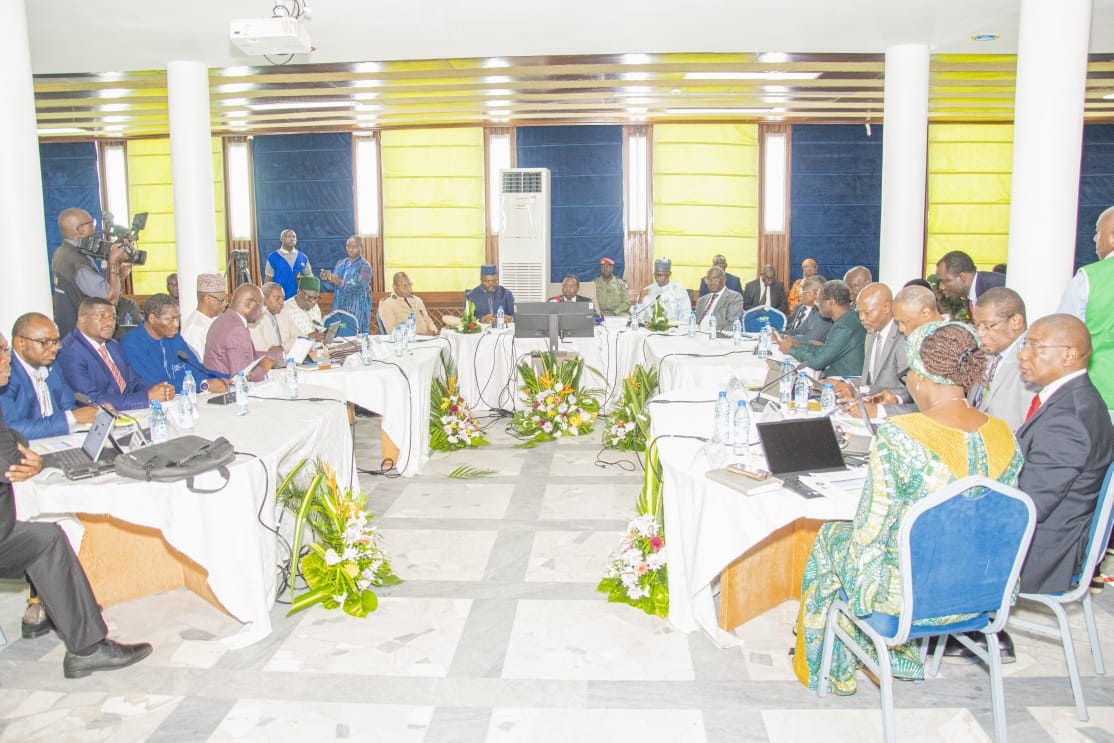
Douala, 08 October 2026- Today, the Minister of Water Resources and Energy, Gaston Eloundou Essomba was at the Operational Centre of the Cameroon Electricity Corporation on a mission to evaluate implementation of the company’s roadmap across the first 100 days following appointment of its maiden management team.
During the first four months of its existence, the Cameroon Electricity Corporation, fully State owned, has set about planting the pillars of its transformation, amid its restructuring and modernisation. As such, modelling its governance on the templates of State companies, leveraging the mechanism to enhance its financial situation, improving on its infrastructure for better service quality and digitalisation are the cornerstones of the areas where the company will act as a priority . Additionally, strategic review culminated in the 2026/2027 emergency plan and areas for multi-annual action.
All these are consistent with the priority objectives the Government set through its Minister of Water Resources and Energy, Gaston Eloundou Essomba. In fact during a government communication’s outing in June alongside the Minister of Communication, René Emmanuel Sadi, the Minister of Water Resources and Energy declared that SOCADEL’s first 100 days should be the starting point for the company’s recovery. “I would like to be very clear. The first 100 days are not a promise of some miracle solution. Neither are they are a time-line at the end of which all the challenges in the electricity sector would have disappeared. Nobody can seriously claim to solve in three months difficulties that have stacked up over several years.
This would neither be realistic or responsible. So, what do these first one hundred days represent?
They represent the starting point for recovery,” had he explained.
What has been done and which results has this yielded?
Governance
SOCADEL complying with State company requirements as well as strengthening governance and internal control have been front and centre during the first months and will still be a priority. These are some of the things that have been accomplished:
- existing Governance Bodies : The General Manager, & Board Members have been appointed while Specialised Committees (Public Procurement, Audit and Finance, Strategy and Operations, Human Resources and Pay) and the Adhoc Internal Committee for Contract Award and Monitoring have been set up and are operational;
- as concerns the design of a new organisation : an organisation that carters to the company’s current and future needs is being designed, alongside process redesign;
- new procurement rules have been adopted and contract award procedures have been implemented in accordance with Law No. 2017/011 governing State companies and Decree No. 2018/355 of 12 June 2018 spelling out Common Rules Applicable to Public Contracts;
- as concerns measures to strengthen financial governance: revenue has been centralised, collection channels have been rendered traceable, and a mechanism to distribute resources between sector actors has been designed.
- the Performance Contract with the Government is being finalised;
- Set up of the consultative framework between EDC, SONATREL and SOCADEL is being finalised;
- the Monitoring and evaluation Scorecard for managing performance indicators has been set up;

Financial Recovery
The drive to fix SOCADEL’s finances based off the sector finances mainly focused on enlisting national banks, initiating audits and actions to optimise expenses and strengthen drives for recovery and fighting fraud.
Enlisting Banks
On July 1 2026, the Cameroon Electricity Corporation (SOCADEL) signed an arrangement and fund raising mandate with General Bank of Cameroon (formerly Société Générale Cameroun) to raise 60 billion CFAF from banks. General Bank of Cameroon is tasked with setting up the loan with several national banks. These resources will finance priority investments in power generation, distribution and commercialisation meant to progressively improve on electricity service quality.
In August 2026, General Bank Of Cameroon, Afriland First Bank and BGFI Bank were given another mandate to organise and syndicate, with local banks, for an overall facility targeting two hundred billion (200, 000, 000, 000) CFAF. General Bank of Cameroon is the arranger and syndicate leader, while Afriland First Bank and BGFI Bank are co-arrangers. The envisaged amount is hinged on two syndicated lines, which meet two distinct yet complementary needs :
- Facility 1 - renewable loan : CFAF 50 billion. The aim of this line is to meet current cash flow needs and build an operational liquidity reserve.
- Facility 2 - medium- term loan : CFAF 150 billion. The aim of this line is to refinance existing bank loans and trade payables, over longer maturities, in order to reduce short-term commitments.
For transparency sake: Signing this mandate opens the structuring and syndication phase. It does not mean the funds have been made available right away. The funds will be mobilised subject to loan authorisations, finalisation of contract documents and fulfilment of standard conditions.
These transactions are the first concrete milestone in the financial recovery plan initiated by SOCADEL.
Audits and Expense Optimisation
The 6 ongoing audits are the following: receivables audit, debt audit, human resource audit, inventory audit, financial costs audit and contracts audit. Findings from these audits will make it possible to envisage and structure an endeavour to offset mutual debts between State entities and SOCADEL, rationalise financial costs initiated under debt refinancing, renegotiate or terminate non-performing engagements, and enhance the saving potential under structural costs.
Similarly, some measures have already made it possible to reduce expenses. In fact, 3 billion CFAF have been saved under rationalisation of operating costs and 3.5 billion CFAF have been saved in costs relating to technical assistance and consultants.
Strengthening Recovery Operations and the Fight Against Electricity Theft.
With support from government, represented by staff from the Ministry of Water Resources and Energy as well as law enforcement, SOCADEL employees are increasing operations to recover unpaid amounts and fight fraud.
- A special drive to recover amounts owed by customers was launched in July 2026 and focuses on intensifying measures on the customers’ side, combining sensitisation with repression.
- Amid the sting operation launched by the Ministry of Water Resources and Energy in March 2026, the fight against fraud has intensified. From a security perspective, greater enlistment of the forces of law and order has made it possible to improve on the field safety of personnel deployed by SOCADEL to check for fraud and perform disconnections. These operations have begun to yield fruits. The average amount collected under the fight against fraud between May and July 2026 has increased by 26% when compared to the average monthly amount collected between January and April 2026. Similarly, to strengthen the institutional framework and enhance the effectiveness of anti-fraud measures, a national anti-fraud brigade will soon be created. SOCADEL warmly welcomes this development, which should enable actors wage a more coordinated fight.
- The pace at which new customers are connected has increased since SOCADEL resumed such activities as compared to performances during the first four months of the year. As from April 2026, the number of connections has increased from 9, 632 to 11, 019 in July of the same year, representing a 14% increase. The trend of 11,000 connections per month continues. This has made it possible to increase the number of connected households and business connected to the SOCADEL network to 2,431 million, 400,000 of which benefited from PERACE. One million ninety thousand six hundred and fifty-four (1, 090, 654) connected households and businesses have been connected in prepaid mode, representing 44.85% of all prepaid metres, which specifically stands at 2, 431, 711 at the end of September 2026. Network extension has contributed to these achievements. At the end of August 2026, SOCADEL had completed the construction of 23 distribution substations and 50 km of infrastructure and power supply power lines (medium and low voltage). The major distribution power lines commissioned to transmit electricity through the newly-constructed SONATREL substation in Nylon-Douala and those pegged to the Nyom Substation are found in this lot. Ongoing works in this same domain are related to 35 local distribution networks and 60 KM of medium and low voltage power lines.
- A MINEE initiative with ARSEL oversight, the Programme for Transitional Access to Electricity (PATE) was launched since July 1 2026. PATE is a special measure to combat non-technical losses. It targets electricity users (consumers with no subscription) located in areas under-served by the distribution network. Generally speaking, their installations are powered with no meter and are not recognised. Attested to by a provisional contract for access to electricity (CATE) pegged to these installations, PATE offers these customers recognition and a secured connection to the network pending comprehensive normalisation. Over 500 households have already benefited from this transitional contract.
- SOCADEL is continuing its programme to connect industrial customers to the grid.
This accounts for the recent commissioning of the power supply facilities of CIMAF and CACEMCO, Sinafcim, Afisa Port Side and UCB for an overall voltage of 10MW for these industrial customers. Works are under way to capture 22MW in the coming months. The goal will be to connect the following industrial customers: Pristine, Etiquette, Alliance Packaging, Source du pays, UNICEM/SCIEB and Afisa country Side.
Furthermore, the contract award process is being finalised to launch works for connecting other industrial customers representing demand of 33MW.
- It should be noted that institutional support has facilitated the development of a consultative framework to clear the debt of the State and of its constituent bodies. Discussions are continuing to agree on the debt, and the terms of payment, as well as to develop and implement a plan to regularly pay the bills of the State and of its constituent bodies.
Following discussions with the Regulator (ARSEL), SOCADEL has agreed on a consensus-based technical framework to guarantee the long-term reliability of public lighting billing from September 2026, pending the widespread roll-out of a metering system.
- ARSEL and SOCADEL are working together to enforce the new applicable tariff conditions. The structural cause of the sector’s financial imbalance lies in the persistent gap between the average tariff paid by consumers and the cost of providing the electricity service. This cost per kWh is CFAF 118.24 on average, compared to an average price of CFAF 85.42; a difference of CFAF 27.8. The freeze on low-voltage tariffs since 2012 has widened this gap, pegging the sector’s stability to tariff compensation borne by the State budget, the payment of which is still irregular. As long as this gap remains, operational gains achieved in other areas will not meaningfully help restore financial balance in the long run.
All things considered, as coordinated by the Government, SOCADEL is working with relevant stakeholders to progressively restore the electricity sector’s financial balance, and thus, resolve the issue of debts sector actors owe each other.
Actions to raise funds and restructure, which have been initiated with banks, operations to increase recovery of unpaid amounts and optimise expenses, as well as fight electricity theft specifically aim to increase cash flow in the sector and support the investments needed to improve on service.
All ongoing plans for development and operations at SOCADEL just as in the sector are mainly driven by the goal of solving this crisis. The commitment of actors, and mainly of the State, makes it possible to believe that the financial situation will improve progressively. This should also be beneficial to SOCADEL’s leading partners. The priority remains continuous and quality power supply.
- To improve customer experience, SOCADEL is working to consolidate and enhance its digital solutions. This entails digitalising billing (WhatsApp, my.socadel.cm, Lumi virtual assistant), and making online and local payment methods more available.
Supply-Demand Balance and Technical Service Quality
Based on the complaints received daily via SOCADEL’s main digital alert channels (call centre and the 160 WhatsApp groups managed by agencies) electricity consumers have reported a noticeable month-in-month-out improvement in service continuity since May 2026. The number of power outage alerts in August 2026 was notably 70% lower than the figure recorded in April 2026.
This improvement, as reflected in customer feedback, is consistent with the overall demand coverage rates SOCADEL’s teams recorded in August 2026, which stood at over 95% in the North Interconnected Network and just over 98% in the Southern Interconnected Network, compared to approximately 70% and 90%, respectively, in April 2026.
This coverage rate has gradually improved since May, driven by the combined effect of greater mobilisation of resources (notably to buy fuel) by the head office despite financial constraints, a special plan to increase generation capacity in the East, significant deployment of technical teams, renewed rainfall in the Benoue drainage basin (leading to increased power generation at Lagdo), the Sanaga and the Ntem, as well as the commissioning of some facilities on the transmission network.
The cold weather also takes the strain off infrastructure that is usually subject to overheating – a cause of numerous incidents – during the dry season.
Among the drivers of service continuity features implementation of the distribution network maintenance plan, which as of ending August 2026 entails the following actions : replacing 23 ,150 Critical Poles , cleaning200 km of Power Line Corridors ( 65% of which are found in the Centre, South and West Regions ), rehabilitating 16 KM of underground connections ( Douala, Yaounde, Ebolowa, Bafoussam, and Bamenda), building 33 stilt-mounted distribution substations to increase or better distribute capacity and reduce low voltage occurrences. The maintenance measures initiated have made it possible to improve on distribution performance indicators. This is evident in the reduction of the frequency (SAIFI) and the duration (SAIDI) of outages caused by the distribution network. Furthermore, as of ending August 2026, what has been achieved with respect to these indicators goes beyond the objectives set by the regulator.

However, the system is still vulnerable in some areas, leading to power supply challenges in some areas. The East Region is thus experiencing disruptions due to a prolonged generation shortfall at the Lom Pangar Power Plant and regular breakdowns along transmission and distribution networks in the northern part of Bonaberi and Dibombari, pending upgrades to the transmission capacity of the Bekoko Substation (SONATREL has promised an upgrade by the end of the year) or in Douala 1 and 2, which were sporadically affected in September by an incident at the Koumassi substation (which was eventually partially resolved by SONATREL)
Another area of vulnerability has been the fact that stocks of materiel critical for projects, operations, maintenance and commercial operations (such as transformers, cables among others) ran out before SOCADEL arrived. As such, to support this large-scale programme to maintain and renew structures as well as to fix the critical situation of stock, a vast plan was initiated to acquire materials and spare-parts.
So far, 5 call to tenders have been launched:
- as concerns Distribution and Commercial Operations : 709 transformers, 476 HVA cells, 2, 138 km of overhead MV cable and 929 km overhead LV cable, 255 km of underground MV cable); as concerns power generation: 178 spare parts references, i.e. 3, 860 spare parts for generator repairs.
Other Call to Tenders relating to Materials will be launched in the coming weeks.
For the final quarter of 2026 and early 2027 (a critical low-water period), SOCADEL’s teams are actively tracking how demand can be met by monitoring dam filling operations, implementing projects to improve the availability of SOCADEL power generation plants, carrying out the project to expand the Maroua and Guider Solar Power Plants,finalising studies to launch works for construction 100 MW of solar capacity in the SIG at the Government’s request, closely monitoring SONATREL works to increase transmission capacity, and taking priority actions on the distribution network.
Building Patriotic Momentum: Brand Identity and Corporate Story
Apart from this operational and financial recovery, SOCADEL’s first hundred days have also been consistent with the start of a major initiative designed to generate genuine patriotic enthusiasm for this national project. This strategic approach is based on the development of an origin story rooted in the history of electricity in Cameroon and clear institutional positioning built around three key pillars: sovereignty, a sense of service and commitment. The aim of this positioning is to link the legacy of Cameroon’s electricity sector to SOCADEL’s aspirations for modernisation, in order to ensure that the operational transformation is accompanied by strong buy-in and ongoing support for this public asset.
The forthcoming unveiling of the new visual identity and roll-out of new communication initiatives will support this momentum, ahead of a corporate communications campaign designed to provide long-term support for the transition from Eneo to a State-owned company fully committed to serving the nation.
Positive Marker and Structural Constraints
All things considered, the improvement perceived in recent months is a sign of the determination and commitment to recovery. It does not shroud the structural constraints and systemic weaknesses that threaten the continuity of power supply. The first months were spent conducting a more detailed analysis of the system in a bid to develop guidelines for recovery, starting with an emergency plan to rapidly improve service quality.
Emergency Plan
Given the severity and simultaneous nature of these challenges, a structured, swift and measurable response is required: the 2026–2027 Emergency Plan, worth CFA F 107 billion, is both a short-term stabilisation plan and a catalyst for medium- and long-term transformation. This Emergency Plan has four main parts:
Financial Balance:Extending the network, to primarily capture industrial demand, speeding up low-voltage connections, improving recovery, making the billing process more reliable and combating fraud.
Distribution Efficiency: Increasing generation capacity by refurbishing thermal power generation units, maintaining large hydroelectric power plants, building more solar power plants, and tackling energy losses.
Customer Perception: Prioritising preventive maintenance of distribution infrastructure; developing technological solutions to run the network in order to reduce the duration of power failures (SCADA/DMS/OMS); strengthening the medium-voltage distribution network; fixing underground cables; and securing assets.
Building our Future Capabilities: This will be evident in the acceleration of digital transformation (a programme to list and georeference infrastructure , process management, data centres, cyber security, digitisation of customer relations, etc.) and building staff capacity through the roll-out of the SOCADEL Academy and the certification of teams.
The financial resources being mobilised will help implement this plan.
Valuable Support from the Government
SOCADEL believes that improving performance also depends on the support measures that the government could bring or help to put in place:
- publication of new electricity tariffs to reduce the gap between the applicable tariff and the cost of service;
- monthly payment of electricity bills by State bodies and the administration;
- raising the necessary additional funds for the company’s recovery;
- streamlining energy procurement costs;
- implementing urgent solutions to ensure balance between supply and demand.
SOCADEL Communication
-----------------------------------------------------------------------------------------------------------------------------------
Download the press release HERE


https://www.eneocameroon.cm/index.php/en//component/content/article?Itemid=746&id=3618#sigProId6c7091fe47


